
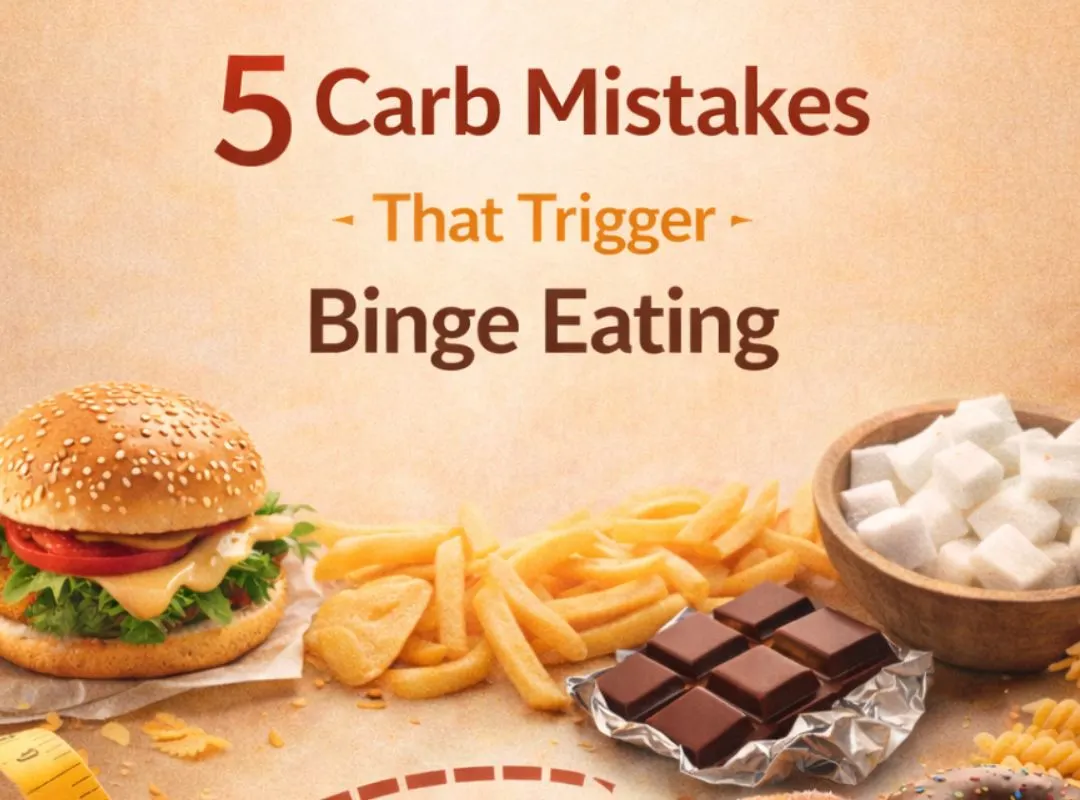
Don’t Fear Carbs, Choose the Right Ones!
-
Binge Eating Starts with Restriction
Most binge eating begins when the body feels deprived. It starts with restriction, not overeating.When carbs are cut too aggressively, the body shifts into survival mode.
Later, it demands compensation, often as intense cravings.
-
Add Nourishing Carbs, Don’t Eliminate Them
Carbohydrates are not the problem. How and which carbs you eat makes all the difference. Carbs to add more of:- Whole grains
- Vegetables
- Fruits
- Lentils and legumes
-
Limit the Carbs That Spike & Crash
Carbs to limit or eat in moderation:- Sugary drinks
- Processed foods
- Sweets and packaged snacks
- Grain-heavy meals with no protein, fat, or fibre
-
Know the Carb Difference
Why do some carbs calm you and others don’t? Complex carbs (grounding):- High in fibre
- Slow digestion
- Keep you full longer
- Provide steady energy
- Stripped of fibre
- Cause blood sugar spikes
- Lead to sudden crashes
- Trigger hunger and binge urges
-
Make Simple Swaps
Prefer warm, cooked meals over raw-only foods. They digest better and reduce the urge to keep eating. Simple carb swaps that reduce binges:Instead of Try White rice Brown rice, millets, quinoa White bread 100% whole-grain or sprouted bread Fruit juice Whole fruits Sugary cereal Millet flakes with seeds, nuts & fresh fruit Potato chips Nuts, air-popped popcorn, makhana, baked sweet potato Regular pasta Whole-wheat or lentil/chickpea pasta Sugary drinks Buttermilk, tender coconut water, nut-based drinks